Knitting For Profit

Knitting information, ideas and success stories from women who create real cash flow from their knitting and crochet.


Posts Tagged ‘yarn’

Linen Knitting Yarn Review

Thursday, January 28th, 2010

Linen is produced from the stem of the Flax plant and is a surprisingly durable, lightweight fabric and thread that has some really amazing durability and elasticity. The linen knitting yarn is no different here. While the term “linen” has become something of a rather vague and very broad category all its own, the linen knitting yarn is definitely one that you will want to try at least once.

Linens are known to date back to prehistoric times. Sufficient evidence has been discovered to conclude that linen was indeed traded as a currency in ancient Egypt. The linen is also what was used when a person of greatness died due to the symbolism attached to such a valuable and precious commodity. These days, when many people discuss “linens”, they are discussing a wide range of household items that are or at least were made from the linen cloth originally.

When it comes to the properties of linen knitting yarn, your garments may tend to wrinkle a bit easier than anything but maybe some of the tightly knitted cotton garments but linen makes up for this in many ways. The linen knitting yarn produces very lightweight garments that are durable and easy to clean. Most linen knitting yarns will handle machine washing in warm water and with the exception of a few wrinkles, come out none the worse for wear.

Bleeding tends to be kept to a minimum even in warm water so the hand knitted linens will often last for a very long time. Additionally, the linen knitting yarns tend to make garments which are not quite as prone to pilling as some of the other fiber knitting yarns are. The linen, once knitted into a garment, will also work very well at releasing moisture from your skin. The linen knitting yarn also tends to create garments with an exceptional elastic property. Together, these qualities make linen knitting yarn ideal for creating lightweight summer gear for under or outer wear garments.

Pure linen knitting yarn can be fairly expensive but is certainly not unreasonably priced for the most part. The fibers that are used to make the linen knitting yarn are very long and are mostly spun into very lightweight yarns such as lace or baby weights. The linen also has some strange tendencies with dyes and variations may occur. However, it is always a good idea to buy all of your yarn for a single project at the same time from the same batch. Thus, in many respects, the actual absorbency of the linen knitting yarn should not present any major difficulties outside of the norm for most knitters. 

Working with the linen knitting yarn may be a little difficult at first as it tends to be a bit stiff and getting the stitches just right may take a little added practice when you first begin working with it but as time goes on, it should become increasingly easier. The garments made from linen knitting yarn have the added benefit of becoming softer and more comfortable the more they are washed so if you are looking to knit a gift that will last forever, linen knitting yarn may give you your best chance to make that happen.

Novelty Knitting Yarn Review – Ribbon Yarn

Thursday, October 29th, 2009

Novelty knitting yarns may be a bit more difficult to use than some of the regular knitting yarns, will but you can also do some really amazing handiwork with these yarns once you master their individual quirks and figure out which knitting needles you are going to need for them. Once you have mastered the basics of knitting, you may want to be able to try something a little bit different. If such is the case with you, many of the novelty knitting yarns will offer you the opportunity to hone your knitting skills while making some beautiful home made crafts.

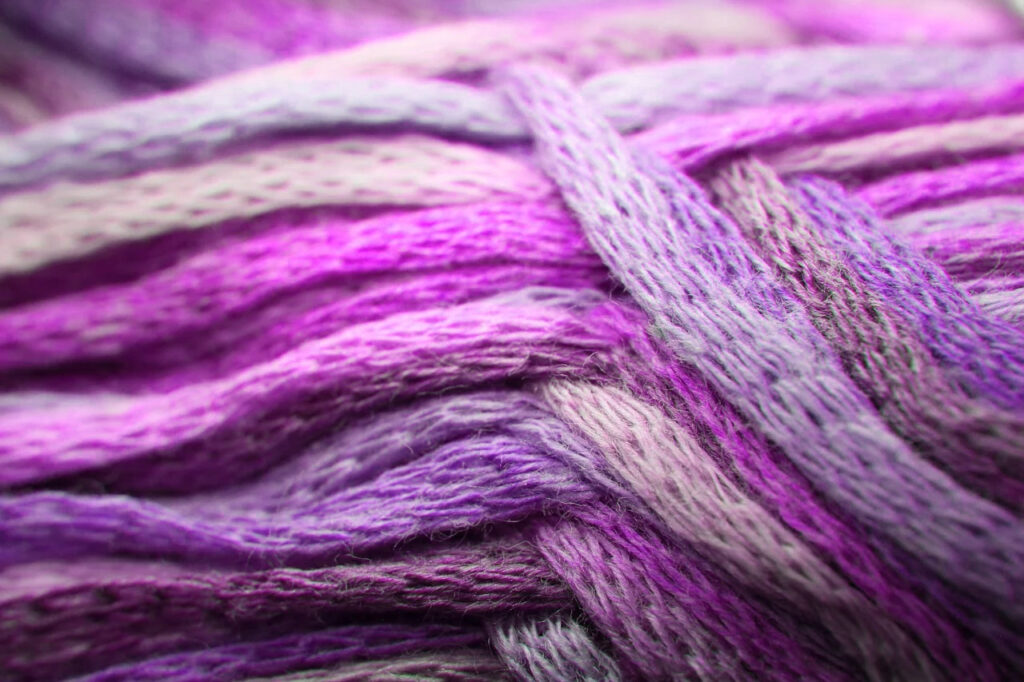
Ribbon knitting yarn is a very popular yarn for making accessories and embellishments for your knitting crafts. However, it is very similar to actual ribbon so working with it presents two major problems right off the bat. First, you have to understand and accept that the ribbon knitting yarn is going to twist and turn a lot while you are working with it off a spool or even many bobbins. There are certain ways around this and while they are not complete solutions, they are often enough to make the work much less tedious and allow you to enjoy your knitting a bit more.

Many flat bobbins are available for a few cents each. These flat bobbins (often scarcely anything more than a small piece of plastic with beveled outer edges to prevent the yarn from slipping off) allow the ribbon knitting yarn to be straightened as you place it on the bobbin itself. Ideally, when you are working with the knitting, the bobbin can be strategically placed so that it flips as you remove the yarn you are stitching with. You may still suffer from a bit of twisting and folding as you work the yarn with your knitting needles but it should be substantially less than you would otherwise encounter working with the ribbon yarn directly from a ball or a skein.

The other problem you will frequently encounter is having the ribbon yarn twisting as you work it with your knitting needles. While this can be frustrating, it is at least to a certain extent, going to be inevitable but you can still minimize the hassles some by being a little creative. My grandmother actually overcame this problem by using crochet needles that had a small hook on the very tip. While the knitting process itself was a bit slower, she would work the yarn as much as she did her knitting and actually got really good at keeping the ribbon relatively straight and uniform. There was still some loss of consistency in some of the stitches but it was kept to a minimum.

The ribbon knitting yarn is very popular for making trim. The addition of beads to the edges of the yarn add a unique touch as well as allowing you to secure the end knots and preventing unraveling or allowing your stitches to work loose. Another very popular use for the ribbon knitting yarn is to create shawls, head dresses and other fashion accessories that can highlight or enhance your hand knitted garments as well.

While the novelty knitting yarns like the ribbon yarn can be a bit more difficult to work with, they can also be very rewarding and add uniqueness to your hand knitted items.