If you love knitting and have ever wished you could make money from it, then make sure you keep reading because I
Monday, February 22nd, 2010
Felting knitting yarn is almost a misnomer here but it fits, Felting is actually the process of turning a knitted piece of work, no matter what it is, and turning it into a pseudo-cloth fabric by constantly stabbing it with your felting needles, themselves devices that should be one of those things that never came to be!
The felt knitting yarn should be a worsted yarn. As a general rule, look at what size knitting needles are required for the worsted or felting knitting yarn and go up about two sizes too large from the factory specifications.
If you would like to do your felt knitting the old-fashioned way, you will need some raw wool or other material that has not been spun and a pair of felting needles. If you decide to do this, be certain never to leave your felting needles unattended around cats or your other yarn as they will inevitably become entwined in ways that were never meant to be and are nearly impossible to resolve peacefully. Fortunately, there is a more merciful method that, while not one-hundred percent guaranteed, is substantially easier and less likely to result in injury or a complete loss of all your knitted crafts.
Take your worsted knitting yarn and knit with overly large stitches (as you would have to with over-sized knitting needles) and make whatever you are making roughly twice the size that it should normally be were it just a regular item not to be felted. When it is done, make sure that all of your loose ends are well tended to and not loose anymore.
The hard part is yet to come and any loose ends could very easily ruin all of your knitting. Do not worry about the size of the item being so large, initially it is going to get even larger and then it will shrink … maybe more than you want if you are not careful and attentive.
Find a sealed cloth bag to put your knitting into before you get the washing machine ready. A pillow case with a zipper seems to be about the best solution as it will help you keep your washing machine in working order after you are down felting the knitting. Make certain that any straps or other loose items on your knitted item are straight and then seal it in the bag.
If you fail to do this, the massive amount of lint that is getting ready to be turned loose could easily clog even the best washing machine … especially if you are felting a large knitted sweater or cape. Now it is time to get your washing machine ready.
By all means never stick your hands into an open washing machine that is still agitating but you will have to be very careful to stop your machine at least every five minutes so please be careful. Set the water level for the lowest setting possible, set the wash cycle to hot and the rinse cycle to cold. Do not let the machine cycle all the way through though. Start with one tablespoon of color-safe detergent before you even think about dropping your pillowcase and knitting in the washing machine.
When there are some suds in the hot water, place your pillowcase in the washing machine and let it agitate for about five minutes. Pull your pillowcase out of the water every five minutes, make sure that nothing is twisted or bent out of shape or your felting knit will be uneven. Some bleeding is also going to occur so just understand you really cannot prevent that.
Repeat this process as needed being certain to check your knitted craft at least every five minutes. The first time you check it, it will be slightly larger than you made it but it will quickly shrink back down and then you get to watch the felting process begin.
When it is what you feel to be the right texture and size (as it is your work after all) you are ready for the last stage of knitted felting. You can use cold rinse water in the washing machine but the colder the water is, the better the felting results will be. If you have a tub, bucket or other container large enough to hold your knitted and felted craft and ice water, that would be ideal. If you do use your washing machine for the cold rinse, be certain not to let the spin cycle kick in as this will very likely ruin your felting knitted products.
When all of that is done, you are ready to shape your felted knitted garment, bag or whatever else you may have created. Do not be afraid to stretch it and shape it while it is wet. If you start seeing something that does not look right; a quick dip back in the hot water and then straight to the cold water will allow you to start over. While that may seem like a lot of additional work to felt knitting items, when it is done right (and it may take some practice) the finished knitted garment will be a true home-made work of art that you will always love and cherish.
Wednesday, December 2nd, 2009
Beginner knitters are often confused by the term "worsted" knitting yarn because it refers sometimes to weight and sometimes to the makeup of the yarn itself. If you have ever had problems discerning exactly what was meant by “worsted yarn” in one of your patterns, keep this article handy and you should be able to figure it out in short order by looking at a couple of key points about worsted knitting yarns. The first thing you have to figure out is whether it is the weight of the yarn or the type of the yarn being discussed in the pattern.
Worsted Weight Knitting Yarns
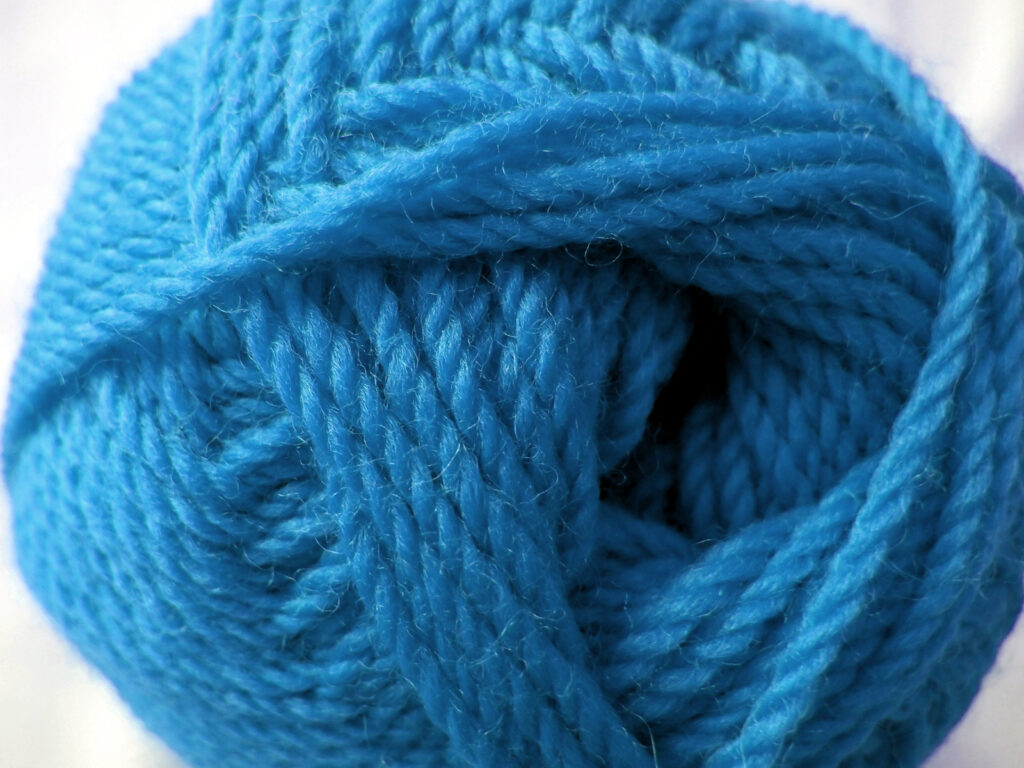
If you hear the term “Worsted Weight” when someone is referring to knitting yarn it is generally going to be a medium size yarn. The worsted weight knitting yarn will usually allow four to five stitches per inch. It is a very popular weight for making everything from afghans to sweaters to hats and mittens. The “worsted nature” of the yarn also makes it exceptionally easy for beginners and experienced knitters alike since it is generally very smooth and strong.
Worsted Spun Yarn (Also sometimes known as True or Pure Worsted Yarn)
Originally, worsted spun yarn only referred to wool yarn but the difference between the woolen yarn and the worsted yarn was in the actual preparation and spinning process of the yarn. The term itself comes from the English town of Worstead in Norfolk England. An influx of weavers, tailors and other textile workers in the 1200s made this one of the leading centers in the world for the production of textiles. The spinning process was first recognized there and that is where the term Worsted has its origins.
The preparation process is the first step in the production of worsted knitting yarn that separates it from the woolen yarns. When sheep were still shorn by hand, the process was actually easier and there are still some of the more expensive yarns that utilize this process but that is a different story. When the wool is shorn, the wool is all kept in the same direction meaning that the roots and the ends will all still be facing the same direction.
After this wool has been combed out, the short fibers (any fibers under three inches or about seven and one half centimeters) are removed so that only lengthy fibers remain. They are then combed out individually until they are flat and kept parallel to one another. When the worsted yarn is spun, the placement of the fibers all running in one direction keep the yarn thinner and having a tighter “braid” so that the finished worsted spun knitting yarn has much less space for air or anything else to get through it. This made the worsted spun yarn very popular for the creation of many knitted items.
The Worsted Knitting Yarn is not usually going to be as flexible as the woolen yarn due to the tighter braid. As such, the worsted knitting yarn is not always the best choice for garments that will be worn as an outermost layer and may need to be stretched over other clothes or otherwise require so it may not be the best choice for some items that do require more elasticity.
Today, you can easily purchase worsted yarn that is made from wool, cotton and even acrylic fibers. While the actual fiber base for the knitting yarn may be a bit different, the worsted spun knitting yarn will be a tighter bound yarn and as such, an excellent choice for many of your knitting creations. There is a very good reason that the worsted yarn remains one of the most popular among knitters of all ages and experience levels.