Knitting information, ideas and success stories from women who create real cash flow from their knitting and crochet.
Monday, February 22nd, 2010
Felting knitting yarn is almost a misnomer here but it fits, Felting is actually the process of turning a knitted piece of work, no matter what it is, and turning it into a pseudo-cloth fabric by constantly stabbing it with your felting needles, themselves devices that should be one of those things that never came to be!
The felt knitting yarn should be a worsted yarn. As a general rule, look at what size knitting needles are required for the worsted or felting knitting yarn and go up about two sizes too large from the factory specifications.
If you would like to do your felt knitting the old-fashioned way, you will need some raw wool or other material that has not been spun and a pair of felting needles. If you decide to do this, be certain never to leave your felting needles unattended around cats or your other yarn as they will inevitably become entwined in ways that were never meant to be and are nearly impossible to resolve peacefully. Fortunately, there is a more merciful method that, while not one-hundred percent guaranteed, is substantially easier and less likely to result in injury or a complete loss of all your knitted crafts.
Take your worsted knitting yarn and knit with overly large stitches (as you would have to with over-sized knitting needles) and make whatever you are making roughly twice the size that it should normally be were it just a regular item not to be felted. When it is done, make sure that all of your loose ends are well tended to and not loose anymore.
The hard part is yet to come and any loose ends could very easily ruin all of your knitting. Do not worry about the size of the item being so large, initially it is going to get even larger and then it will shrink … maybe more than you want if you are not careful and attentive.
Find a sealed cloth bag to put your knitting into before you get the washing machine ready. A pillow case with a zipper seems to be about the best solution as it will help you keep your washing machine in working order after you are down felting the knitting. Make certain that any straps or other loose items on your knitted item are straight and then seal it in the bag.
If you fail to do this, the massive amount of lint that is getting ready to be turned loose could easily clog even the best washing machine … especially if you are felting a large knitted sweater or cape. Now it is time to get your washing machine ready.
By all means never stick your hands into an open washing machine that is still agitating but you will have to be very careful to stop your machine at least every five minutes so please be careful. Set the water level for the lowest setting possible, set the wash cycle to hot and the rinse cycle to cold. Do not let the machine cycle all the way through though. Start with one tablespoon of color-safe detergent before you even think about dropping your pillowcase and knitting in the washing machine.
When there are some suds in the hot water, place your pillowcase in the washing machine and let it agitate for about five minutes. Pull your pillowcase out of the water every five minutes, make sure that nothing is twisted or bent out of shape or your felting knit will be uneven. Some bleeding is also going to occur so just understand you really cannot prevent that.
Repeat this process as needed being certain to check your knitted craft at least every five minutes. The first time you check it, it will be slightly larger than you made it but it will quickly shrink back down and then you get to watch the felting process begin.
When it is what you feel to be the right texture and size (as it is your work after all) you are ready for the last stage of knitted felting. You can use cold rinse water in the washing machine but the colder the water is, the better the felting results will be. If you have a tub, bucket or other container large enough to hold your knitted and felted craft and ice water, that would be ideal. If you do use your washing machine for the cold rinse, be certain not to let the spin cycle kick in as this will very likely ruin your felting knitted products.
When all of that is done, you are ready to shape your felted knitted garment, bag or whatever else you may have created. Do not be afraid to stretch it and shape it while it is wet. If you start seeing something that does not look right; a quick dip back in the hot water and then straight to the cold water will allow you to start over. While that may seem like a lot of additional work to felt knitting items, when it is done right (and it may take some practice) the finished knitted garment will be a true home-made work of art that you will always love and cherish.
Thursday, January 21st, 2010
Merino knitting yarn and the garments made from it are renowned for their warmth, softness and breathability, and because merino is generally less expensive than many of the more luxurious knitting yarns, it can be an ideal choice for your knitted projects.
Merino knitting yarn is traditionally made from the wool of the Merino sheep but this has become a bit convoluted over the course of time. The Merino sheep have been introduced to many different parts of the world and many have been crossbred to produce both finer (and higher quality) meat and wool. The wool from the Merino sheep however, is of particular interest here as it is used for many different aspects of knitting. The Merino Knitting Yarn made from these sheep is great both as a single fiber knitting yarn and as a blended knitting yarn.
The Merino Sheep were first brought into Spain somewhere around the twelfth century. It was not too long thereafter that Spain become famous around the world for its fine wool and woolen products. So luxurious was the wool of the Merino sheep that until some time around the 1700s, exporting these sheep was a crime punishable by death. Fortunately, this law was repealed and the merino sheep has now become a major player in both the wool and yarn industries around the globe. Australia has also attained a level of fame for their fine merino wool.
The wool from the merino sheep varies in thickness and strength giving it the ability to produce many different size yarns. The ultra-fine wool from the merino sheep is generally short but is also extremely fine and luxurious. These qualities make it ideally suited for making blended knitting yarn with silk and the equally luxurious alpaca wool. One of the very few drawbacks of the pure merino knitting yarn is that it does tend to pill though so it may be difficult for some people to care for knitted garments made with pure merino knitting yarns.
The fact that merino knitting yarn and the garments made from it are generally softer even than cotton and also cheaper than some of the more luxurious knitting yarns make it ideally suited to making many undergarments and other clothing that will come into contact with the skin.
For outer garments or even for blouses and slacks, the merino wool still provides much of the same protection and elasticity that can be found in other wools. It is a great knitting yarn for making trousers, blouses or even scarves and ascots that may need to provide some warmth and protection but still need to be comfortable as well. Many garments knitted from merino yarn are sold on the high-end of the fashion sector as well. In these cases, the term “merino” refers to the clothes made from this particular wool or garment.
As with many wool-based knitting yarns, the merino yarn may have some variations in color between batches so if you are going to work with it, it is always best to purchase all of your knitting yarn at once from a single batch in order to prevent any unsightly variations in your finished products. However, given the number of items and garments that can be knitted with the merino knitting yarn, if you do have some left over, you should not be too hard pressed to find other uses for it.
The Merino Knitting Yarn will remain a very viable alternative to some of the more expensive knitting yarns for some people and always a pleasure to work with and to wear.
Friday, January 8th, 2010
Using silk knitting yarn can give your creations a wonderful softness and sheen, and is a popular choice for knitting warm-weather clothes.
Traditionally, silk knitting yarn is made from purely silk fibres, but these days, many variations and combinations of silk knitting yarns are readily available including synthetic knitting yarns with many of the same properties as silk. Still, for quality and originality, nothing can ever completely replace the genuine silk knitting yarns.
Silk yarn is generally woven into a very fine or lace knitting yarn. The sheen and tensile strength of the silk yarns tends to be much better than most other fibers but even among natural silk knitting yarns, there are subtle differences that will result in different results for your garments knitted with silk. The ideal silk knitting yarns are made with the long strands of silk taken in whole from the cocoon of the silkworm. The long strands of silk fiber are used to create the finest quality silk knitting yarn and silk cloth.
There are other methods of creating silk yarn, and not all silk is created equal … though certainly much of it is based on individual tastes perhaps moral grounds for some people. Retrieving the single strands of silk necessitates killing the silkworms. While sufficient qualities are allowed to survive to produce more silkworms to harvest more silk, this actually does present a moral dilemma for some people. Countries like India and a few other places around the world have taken a different approach to harvesting the silk for the creation of silk knitting yarn that is more durable and just as beautiful in nearly every respect.
The harvesting of wild silk is becoming an increasingly popular method for gathering silk fibers for the creation of silk knitting yarn and other silk products. The silkworms are allowed to live a complete life-cycle and only when the cocoon has hatched and the moths have discarded the silk cocoon does the harvest take place. While this does prevent the silk strands from being harvested in a single strand, it does have certain benefits.
The discarded silk cocoons are then carefully removed from their place and brushed and spun much the same as cotton or wool knitting yarns. When the silk is harvested in this fashion it is usually known as Ahimsa silk but this is not always the case. Natural Silk harvesting is becoming increasingly popular around the world. While there are many benefits to getting the silk this way … especially for the silkworms who are more personally involved, there are some drawbacks as well.
Natural silk yarns tend to be a bit more yellow, grey or even brown in shade than the more traditionally harvested silks and the single stranded silks do. This makes them especially difficult to die and they often lose some of their signature silk sheen as well. Fortunately, no matter what type of silk knitting yarn you are looking for, there are many options available these days.
Whether you want silk knitting yarns made from the single strands, wild silk knitting yarns or even synthetic silk knitting yarn, they are all easily found and in a wide range of prices and styles.
Monday, December 21st, 2009
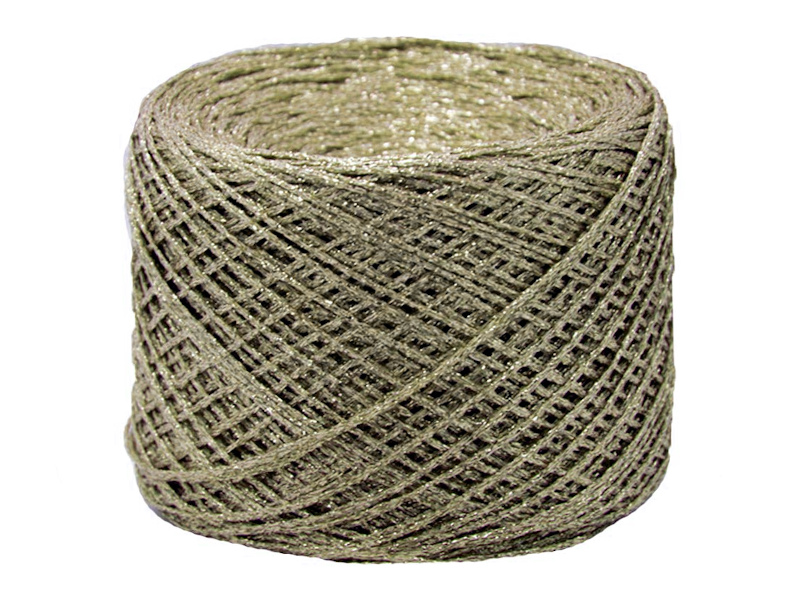
To paraphrase an old movie; “I’m shocked! Shocked I tell you!” While metal knitting yarn has long been used as a decoration, what many people do not know is that it actually serves a very important purpose above and beyond just making your already beautifully knitted garments even more beautiful.
How many times have you picked up a static discharge and gotten shocked by touching someone or something once you have built up enough of that static cling?
In the old days, the most common metal knitting yarns were made out of precious or semi-precious metals and were often associated with the wealthy people and upper classes of society. In modern society, these traditional metal knitting yarns remain very popular and with rare exception, are actually much more affordable for the average person. However, they are not the only types of metals being used any more. These days, it is actually pretty easy to find metal knitting yarn that emulates or looks like the precious metals but in reality is something much more inexpensive but equally enduring in quality and beauty.
Going back to those days of old once more, the oldest examples of metal knitting yarn reveal that the long filaments or fibers of the metal used were actually individually wrapped around some type of fiber base. It was very common for there to be very small gaps in between the wraps in order to allow the underlying fibers to show as well. This gave enough contrast and exposure to the actual metal in the metal knitting yarn to allow it to more easily reflect light and often caused minor changes in color depending on what type of metallic knitting yarn was being used.
These days, the underlying base for the metal knitting yarns is generally another type of metal. The outer wraps are then braided or wrapped on to the base filament creating much the same affect though many would add, with a little more pizzazz. Unfortunately though, even the best of stainless steel can rust over the course of time, so the metal knitting yarn generally must be coated in order to prevent corrosion, color change or fading.
Normally it is not so important to know everything about the creation of your knitting yarn but in the case of metallic knitting yarn, it does help some. There are two very common methods for producing metal knitting yarn and while the end results may look very similar, the actual metal yarn itself is going to be vastly different and will have to be stitched differently … and generally with more difficulty as well. The two, most common methods for creating metal knitting yarn are the laminating process and the metalizing process.
In the laminating process, the metal knitting yarn is coated with some type of preservative that often makes the metal yarn even stiffer and more difficult to work with than it was originally. The metalizing process for creating metal knitting yarn uses a very high temperature to actually turn the metal into a vapor and using high pressure (and precision) machinery, literally blasts the vaporous metal onto a polyester film. The resulting metal knitting yarn is much more flexible and easier to handle and work with.
Any time that you make a knitted garment with the metal knitting yarn, make sure you mark it “Dryclean Only” and “Do Not Iron” as any other method of washing or pressing may very well cause damage to the metal knitting yarn and this could cause problems with the entire garment, not to mention distracting people’s attention from an otherwise beautiful piece of hand made clothing.
If you know a little about the metal knitting yarn before you begin buying it up, you should have a lot easier time learning how to work with it. Remember, not only is the inlay made with metal knitting yarn going to look great, it will help you to prevent many shocking experiences when you are wearing knitted clothes that are more subject to that old static cling.
Wednesday, December 16th, 2009
Cashmere knitting yarns are well-known for being very soft, comfortable and lightweight while still providing an excellent source of protection against the weather and other elements.
Cashmere Knitting Yarn comes originally from Cashmere Wool but not all of that comes from the region of Kashmir where it originated. In fact, China is the largest producer of both the cashmere wool and not surprisingly perhaps, the cashmere knitting yarn as well.
Cashmere Knitting Yarn is especially well-suited for knitting lightweight garments that come into contact with the skin but still must afford a certain level of warmth and comfort as well. However, due to the fact that cashmere wool makes some of the most luxurious and perhaps expensive knitting yarns, it is rarely used for under clothes but rather for suits that are made for winter wear as well as for blouses and shirts.
Cashmere knitting yarn is among the softest knitting yarns and between that and its price, it is generally reserved for knitting higher-priced items that people can show off as opposed to garments that are normally covered or hidden from view.
The primary reason that cashmere knitting yarn is so expensive is because it is not actually from the wool of the Cashmere Goats but their down fur. The down, no matter whether it come from fowl or mammals, is much softer and also much more scarce than the fur, hair or feathers that grow out of down. The cashmere goats are somewhat unique in that their down actually grows around their fur as something of a sub-growth to keep them warm in colder climates. The wool and the down are harvested at the same time in the Spring when the goats would normally be shedding their coats anyhow.
Pure cashmere knitting yarn is generally spun into lace weight yarn, fingering weight yarn or occasionally as large as double knitting yarn. However, the cashmere knitting yarns are frequently blended with other fibers to add different features to the yarn and the finished, knitted garments. The blended cashmere knitting yarn is also generally much cheaper than the pure cashmere yarns.
Some of the fancier cashmere blended knitting yarns are blended with silk. These yarns still generally remain very expensive though. One of the most common blends for cashmere yarn is with different types of wool. This allows the yarn to be spun much thicker and giving it more elasticity as well as retaining the ability to keep people warm. It also helps to sell cashmere knitting yarns at discounted prices.
While this is not a major issue for everyone, it can be a great benefit if you are just learning how to knit and do not want to spend a lot of money experimenting with different types of yarn to make garments that may or may not be all you thought they would when you started the knitting project. Still, both the blended and pure cashmere knitting yarns are generally very easy to work with and according to some people at least, as pleasurable to knit with as they are to wear.
Tuesday, December 15th, 2009
The traditional Alpaca Knitting Yarn comes from the South American Alpaca. The Alpaca is very similar to the Llama though much smaller and with longer hair. The hair of the young Alpaca is generally much softer and the preferred thread for making Alpaca Knitting Yarn. The hair from the older animals is much longer and while it still has many of the same favorable properties, the yarn tends to be more coarse and less comfortable for the production of hand-knitted garments. These days however, Alpaca knitting yarn comes from many different sources including other animal and even synthetic forms.
The natural or traditional Alpaca Knitting Yarn has many properties that make it an excellent choice for many knitted garments. The yarn is very elastic in nature so works great for knitting anything that may need to stretch and contract to fit comfortably. The lack of the Lanolin (such as is often found in knitting yarn made from sheep’s wool) also makes the natural Alpaca Yarn hypoallergenic in nature or very unlikely to cause any allergic reactions. The “wool” or hair of the young alpaca is unusually luxurious and silky making it a very comfortable yarn for knitted clothing that comes into direct contact with the skin.
One of the very popular features of the alpaca yarn is its natural ability to stave off the weather. The Alpacas are traditionally found in elevated areas where the temperatures get very cold. The hair is great for fending off both moisture and cold. The Alpaca yarn can be spun as everything from a bulky yarn to a lace thread depending on how it is spun making it an extremely versatile material for making yarns and knitted garments of all manner. Alpaca fiber is also regularly used in blended knitting yarns as well both to strengthen and beautify the end product.
Many variations of the Alpaca knitting yarn are available these days. The alpaca fibers are regularly combined with wool, mohair and even silk and synthetic fibers to create some extremely beautiful and hearty knitting yarns. The term Alpaca Knitting Yarn actually refers more to the style and quality of the yarn these days as opposed to the actual yarn made from the Alpaca hair fibers.
The natural knitting yarns made from the actual Alpaca hair fibers come in a variety of natural colors that are frequently used for spinning yarn. The shades of color run almost the entire spectrum through reds and browns and even some black and grey. The white alpaca knitting yarn is the most popular and the most common however, as it is the easiest one to dye and create into a wider range of colors for knitted clothes and even cloth.
While there are still many efforts under way to increase both the production of Alpaca Knitting yarns as well as finding new and improved variants and combinations, the Alpaca yarn is readily available almost anywhere. The weight of the yarn is variable allowing you to find it for just about anything that you ever wanted to knit by hand or by machine. It may be reminiscent of an old commercial for many people but it is also true … with a name like Alpaca, it has to be good. The Alpaca Knitting Yarns available on the market today remain among the most popular types of knitting yarn for a reason.
Wednesday, December 2nd, 2009
Beginner knitters are often confused by the term "worsted" knitting yarn because it refers sometimes to weight and sometimes to the makeup of the yarn itself. If you have ever had problems discerning exactly what was meant by “worsted yarn” in one of your patterns, keep this article handy and you should be able to figure it out in short order by looking at a couple of key points about worsted knitting yarns. The first thing you have to figure out is whether it is the weight of the yarn or the type of the yarn being discussed in the pattern.
Worsted Weight Knitting Yarns
If you hear the term “Worsted Weight” when someone is referring to knitting yarn it is generally going to be a medium size yarn. The worsted weight knitting yarn will usually allow four to five stitches per inch. It is a very popular weight for making everything from afghans to sweaters to hats and mittens. The “worsted nature” of the yarn also makes it exceptionally easy for beginners and experienced knitters alike since it is generally very smooth and strong.
Worsted Spun Yarn (Also sometimes known as True or Pure Worsted Yarn)
Originally, worsted spun yarn only referred to wool yarn but the difference between the woolen yarn and the worsted yarn was in the actual preparation and spinning process of the yarn. The term itself comes from the English town of Worstead in Norfolk England. An influx of weavers, tailors and other textile workers in the 1200s made this one of the leading centers in the world for the production of textiles. The spinning process was first recognized there and that is where the term Worsted has its origins.
The preparation process is the first step in the production of worsted knitting yarn that separates it from the woolen yarns. When sheep were still shorn by hand, the process was actually easier and there are still some of the more expensive yarns that utilize this process but that is a different story. When the wool is shorn, the wool is all kept in the same direction meaning that the roots and the ends will all still be facing the same direction.
After this wool has been combed out, the short fibers (any fibers under three inches or about seven and one half centimeters) are removed so that only lengthy fibers remain. They are then combed out individually until they are flat and kept parallel to one another. When the worsted yarn is spun, the placement of the fibers all running in one direction keep the yarn thinner and having a tighter “braid” so that the finished worsted spun knitting yarn has much less space for air or anything else to get through it. This made the worsted spun yarn very popular for the creation of many knitted items.
The Worsted Knitting Yarn is not usually going to be as flexible as the woolen yarn due to the tighter braid. As such, the worsted knitting yarn is not always the best choice for garments that will be worn as an outermost layer and may need to be stretched over other clothes or otherwise require so it may not be the best choice for some items that do require more elasticity.
Today, you can easily purchase worsted yarn that is made from wool, cotton and even acrylic fibers. While the actual fiber base for the knitting yarn may be a bit different, the worsted spun knitting yarn will be a tighter bound yarn and as such, an excellent choice for many of your knitting creations. There is a very good reason that the worsted yarn remains one of the most popular among knitters of all ages and experience levels.
Monday, November 30th, 2009
Novelty knitting yarns like the eyelash yarns are great for making those big, fuzzy, warm hats, scarves and sweaters that are so great for super cold weather. Once you have mastered the art of knitting with eyelash yarn, you can create some truly amazing hand-crafted items for sale. Eyelash yarns add wonderful texture and colour to a knitted piece and are also lovely and warm.
Eyelash yarn is so called because one of the most common forms has a “strand” or single, solid piece of yarn that you actually use for the knitting with loops of yarn evenly placed all along the center strand. There are other variations as well that can easily be used to emulate fur, metallic strands that give your pieces a certain glow and a metallic sheen as well as many other designs.
When the center strand is knitted into a garment or decoration, the “appendages” or bits hanging off that strand hang out the right side of the knitting to create a layer that resembles fur, hair or just give it a fluffy look depending on which type of eyelash yarn you are using for your knitting project. Thus the finished hand-knitted garment can be a very bold and beautiful fashion statement as well as being great for keeping you warm on those cold days or nights.
There are going to be some issues that you need to be aware of when you are knitting with the eyelash knitting yarn. While knitting needles and crochet needles may be highly beneficial in both arts, you probably do not want to use the crochet needles with the eyelash yarn. The reason is that the hooks on the end of the crochet needle will often get caught up in the strands coming off the center strand of yarn and you will spend as much time untangling your fabric and your needles as you will being able to work with the yarn and getting any knitting work accomplished.
You also probably need to be very comfortable with your personal knitting and your ability to make the proper knots and looping before you begin working with the eyelash knitting yarn. A very frequent problem for people who use this yarn is that the right side of your garment will be obscured by the fuzzy parts hanging out and you have to know that your knitting is okay because it will be very difficult to check your knots once you have made them.
If you can stitch a row or two at a time, you can go back and sort through them but this is very time consuming and can cause even more difficulties with unraveling and loosening your knots. If you have a pretty good idea what you are doing though, it is more of a matter of just getting used to working with the new yarn. Before long, you should not have any problems and the eyelash yarn really does open up a lot of new opportunities for your knitting work.
Tuesday, November 24th, 2009
There are many subtle aspects to knitting yarns that need to be taken into consideration when knitting garments or any items that people will be wearing. The main differences will be in the make of the yarn that is being used. Cotton yarns are more absorbent and thus are not really great for mittens, hats or other protective gear, whereas other natural fibers like wool and alpaca have natural oils that help to stave off wet and cold weather conditions much better.
The yarn you choose can ultimately have a very definitive impact on just how well your knitted garments function no matter how nice they look. Traditionally, most knitting yarn is made from cotton or wool but such is no longer the case. Still, since the cotton knitting yarn is very popular, it will certainly not hurt to begin looking there. The most common types of Cottons used in knitting yarns are the American Cotton, the Egyptian Cotton and the Pima Cotton.
The knitting yarn made with American Cotton is generally available in the widest selection of colors. It is very absorbent and easily takes dyes evenly and completely. While there will still be slight variations in the dyes between batches, those skeins that are made from the same batch will generally have only very minute deviations in color and it should not affect your work any at all. The American Cotton can also be easily treated with certain chemicals or combined with other fibers that do make it more resistant to adverse weather conditions and longer lasting.
The Egyptian Cotton is also a very popular material for making knitting yarn. The Egyptian Cotton is generally much softer than the American Cotton although it does not seem to possess the same tensile strength. Being a very soft and absorbent cotton it is generally very absorbent and thus, it can have slight color variations that may show in your finished products. Advances in technology over the last century or so have drastically reduced this problem but it is still a good idea to thumb through the yarn in the skeins when you are purchasing large amounts of Knitting Yarn made with the Egyptian Cotton.
Pima Cotton is a very nice blend of the Egyptian and American Cottons that is a very soft and strong knitting yarn. This particular blend brings out the best of both cottons and works great for almost any type of garment. However, all of these types of cotton knitting yarns do have some issues that may make them nicer or not so nice for individual knitters depending on their personal strengths and weaknesses.
The pure and blended cotton knitting yarns do tend to be very soft and for that reason, some people like them but some people will have a difficult time with them. They do come unraveled rather easily and may require a bit of a soft but firm handle on your work. Once you get used to working with them though, they really are among the best knitting yarns for all-around use. For those people who may not be so comfortable with them, there are many cotton blend knitting yarns available. Just make sure that you check the label before you purchase any large amount of yarn and you should be fine.
Thursday, October 29th, 2009
Novelty knitting yarns may be a bit more difficult to use than some of the regular knitting yarns, will but you can also do some really amazing handiwork with these yarns once you master their individual quirks and figure out which knitting needles you are going to need for them. Once you have mastered the basics of knitting, you may want to be able to try something a little bit different. If such is the case with you, many of the novelty knitting yarns will offer you the opportunity to hone your knitting skills while making some beautiful home made crafts.
Ribbon knitting yarn is a very popular yarn for making accessories and embellishments for your knitting crafts. However, it is very similar to actual ribbon so working with it presents two major problems right off the bat. First, you have to understand and accept that the ribbon knitting yarn is going to twist and turn a lot while you are working with it off a spool or even many bobbins. There are certain ways around this and while they are not complete solutions, they are often enough to make the work much less tedious and allow you to enjoy your knitting a bit more.
Many flat bobbins are available for a few cents each. These flat bobbins (often scarcely anything more than a small piece of plastic with beveled outer edges to prevent the yarn from slipping off) allow the ribbon knitting yarn to be straightened as you place it on the bobbin itself. Ideally, when you are working with the knitting, the bobbin can be strategically placed so that it flips as you remove the yarn you are stitching with. You may still suffer from a bit of twisting and folding as you work the yarn with your knitting needles but it should be substantially less than you would otherwise encounter working with the ribbon yarn directly from a ball or a skein.
The other problem you will frequently encounter is having the ribbon yarn twisting as you work it with your knitting needles. While this can be frustrating, it is at least to a certain extent, going to be inevitable but you can still minimize the hassles some by being a little creative. My grandmother actually overcame this problem by using crochet needles that had a small hook on the very tip. While the knitting process itself was a bit slower, she would work the yarn as much as she did her knitting and actually got really good at keeping the ribbon relatively straight and uniform. There was still some loss of consistency in some of the stitches but it was kept to a minimum.
The ribbon knitting yarn is very popular for making trim. The addition of beads to the edges of the yarn add a unique touch as well as allowing you to secure the end knots and preventing unraveling or allowing your stitches to work loose. Another very popular use for the ribbon knitting yarn is to create shawls, head dresses and other fashion accessories that can highlight or enhance your hand knitted garments as well.
While the novelty knitting yarns like the ribbon yarn can be a bit more difficult to work with, they can also be very rewarding and add uniqueness to your hand knitted items.