Knitting For Profit

If you love knitting and have ever wished you could make money from it, then make sure you keep reading because I


Archive for November, 2009

Eyelash Yarn – Novelty Knitting Yarn Review

Monday, November 30th, 2009

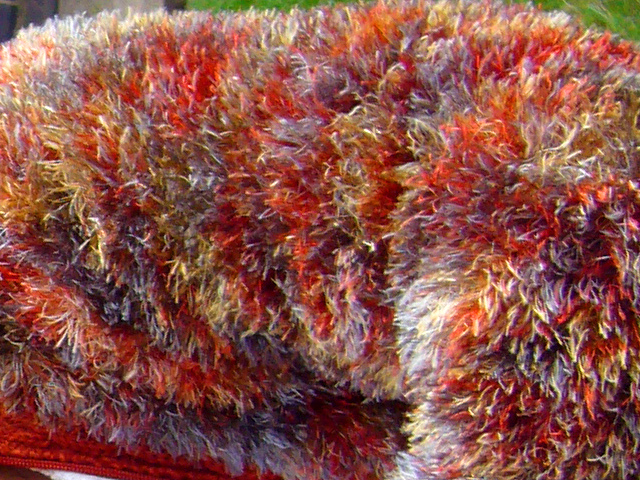
Novelty knitting yarns like the eyelash yarns are great for making those big, fuzzy, warm hats, scarves and sweaters that are so great for super cold weather. Once you have mastered the art of knitting with eyelash yarn, you can create some truly amazing hand-crafted items for sale. Eyelash yarns add wonderful texture and colour to a knitted piece and are also lovely and warm.

Eyelash yarn is so called because one of the most common forms has a “strand” or single, solid piece of yarn that you actually use for the knitting with loops of yarn evenly placed all along the center strand. There are other variations as well that can easily be used to emulate fur, metallic strands that give your pieces a certain glow and a metallic sheen as well as many other designs.

When the center strand is knitted into a garment or decoration, the “appendages” or bits hanging off that strand hang out the right side of the knitting to create a layer that resembles fur, hair or just give it a fluffy look depending on which type of eyelash yarn you are using for your knitting project. Thus the finished hand-knitted garment can be a very bold and beautiful fashion statement as well as being great for keeping you warm on those cold days or nights.

There are going to be some issues that you need to be aware of when you are knitting with the eyelash knitting yarn. While knitting needles and crochet needles may be highly beneficial in both arts, you probably do not want to use the crochet needles with the eyelash yarn. The reason is that the hooks on the end of the crochet needle will often get caught up in the strands coming off the center strand of yarn and you will spend as much time untangling your fabric and your needles as you will being able to work with the yarn and getting any knitting work accomplished.

You also probably need to be very comfortable with your personal knitting and your ability to make the proper knots and looping before you begin working with the eyelash knitting yarn. A very frequent problem for people who use this yarn is that the right side of your garment will be obscured by the fuzzy parts hanging out and you have to know that your knitting is okay because it will be very difficult to check your knots once you have made them.

If you can stitch a row or two at a time, you can go back and sort through them but this is very time consuming and can cause even more difficulties with unraveling and loosening your knots. If you have a pretty good idea what you are doing though, it is more of a matter of just getting used to working with the new yarn. Before long, you should not have any problems and the eyelash yarn really does open up a lot of new opportunities for your knitting work.

Knitting Yarn Review – Cotton Yarn

Tuesday, November 24th, 2009

There are many subtle aspects to knitting yarns that need to be taken into consideration when knitting garments or any items that people will be wearing. The main differences will be in the make of the yarn that is being used. Cotton yarns are more absorbent and thus are not really great for mittens, hats or other protective gear, whereas other natural fibers like wool and alpaca have natural oils that help to stave off wet and cold weather conditions much better.

The yarn you choose can ultimately have a very definitive impact on just how well your knitted garments function no matter how nice they look. Traditionally, most knitting yarn is made from cotton or wool but such is no longer the case. Still, since the cotton knitting yarn is very popular, it will certainly not hurt to begin looking there. The most common types of Cottons used in knitting yarns are the American Cotton, the Egyptian Cotton and the Pima Cotton.

The knitting yarn made with American Cotton is generally available in the widest selection of colors. It is very absorbent and easily takes dyes evenly and completely. While there will still be slight variations in the dyes between batches, those skeins that are made from the same batch will generally have only very minute deviations in color and it should not affect your work any at all. The American Cotton can also be easily treated with certain chemicals or combined with other fibers that do make it more resistant to adverse weather conditions and longer lasting.

The Egyptian Cotton is also a very popular material for making knitting yarn. The Egyptian Cotton is generally much softer than the American Cotton although it does not seem to possess the same tensile strength. Being a very soft and absorbent cotton it is generally very absorbent and thus, it can have slight color variations that may show in your finished products. Advances in technology over the last century or so have drastically reduced this problem but it is still a good idea to thumb through the yarn in the skeins when you are purchasing large amounts of Knitting Yarn made with the Egyptian Cotton.

Pima Cotton is a very nice blend of the Egyptian and American Cottons that is a very soft and strong knitting yarn. This particular blend brings out the best of both cottons and works great for almost any type of garment. However, all of these types of cotton knitting yarns do have some issues that may make them nicer or not so nice for individual knitters depending on their personal strengths and weaknesses.

The pure and blended cotton knitting yarns do tend to be very soft and for that reason, some people like them but some people will have a difficult time with them. They do come unraveled rather easily and may require a bit of a soft but firm handle on your work. Once you get used to working with them though, they really are among the best knitting yarns for all-around use. For those people who may not be so comfortable with them, there are many cotton blend knitting yarns available. Just make sure that you check the label before you purchase any large amount of yarn and you should be fine.

Knitting Pattern Abbreviations – A Handy Summary

Monday, November 2nd, 2009

To follow on from my last post, the other knitting ideas I find really handy is to have a summary of knitting pattern abbreviations and conversions close to hand. So here's a list of all the ones I know or could find – feel free to add more if you know some!

ALT – Alternate or alternately

APPROX – Approximately

BC – Back Cross (Also RC or Right Cross)

BEG – Beginning

BET – Between

BO – Bind Off

CC – Complementary Color – Contrasting Color – The secondary color yarn

CM – Centimetres (2.54 centimetres is the same as one Inch)

CN – Cable Needle

CO – Cast On

CONT – Continue

DEC – Decrease

DPN – Double Pointed Needles

FC – Front Cross (Also LC or Left Cross)

FL – Front Loop

FOLL – Following

G st – Garter Stitch

G – Gram (There are approximately 28.35 grams in one ounce)

INC – Increase

INCL – Including

K – Knitted Stitch – K will often be followed by a number such as K5 meaning you need to make five knitted stitches.

K1B – Knit One Below – Knit the stitch into the row below the one you are stitching

K2TOG – Knit two stitches together

KB – Knit Below – Knit the stitch into the row below the one you are stitching

KFB – Knit into the front and back of a stitch

KWISE – Knitwise – This indicates a slip stitch done “knitwise” or like a knit stitch.

LC – LC Cross (Also FC or Front Cross)

LH – Left Hand

LP – Loop

LT – Left Twist

M – Meter – One meter is roughly 39 inches

M1 – Make One Stitch

M1PST – Make one purl stitch

MB – Make Bobble – A bobble is a raised area that may be included to add a touch of dimension.

MC – Main Color – The Main color yarn for your project

MM – Millimetre – Generally used to gauge or measure needles and occasionally yarn length

Oz – Ounce – Knitting yarn will often be purchased by measures of weight

P – Purl Stitch – P will often be followed by a number like P3 meaning make three Purl Stitches.

P1B – Purl One Below – Purl the stitch into the row below the one you are stitching

P2TOG – Purl two stitches together

PAT – Pattern

PB – Purl Below – Purl the stitch into the row below the one you are stitching

PFB – Purl the front and back of a stitch

PM – Place Marker

PNSO – Pass Next Stitch Over

PREV – Previous

PSSO – Pass Slip Stitch Over

PWISE – Purlwise – This indicates a slip stitch done “purlwise” or like a purl stitch.

RC – Right Cross (Also BC or Back Cross)

RH – Right Hand

REM – Remaining

REP – Repeat

Rev St st – Reverse Stockinette Stitch

RND – Round

RS – Right Side – The side of the “fabric” that will be the outside of a garment or the upside or visible side of a decoration, trim or other element that is visible in the finished product.

RT – Right Twist

SK – Skip

SKP – Slip Knit Pass – This is where you will slip two knit stitches together as one and pass them over the last stitch knitted.

SK2P – Slip, knit two stitches together and pass over the two stitches to decrease by two stitches

SL – Slip

SL1K – Slip one stitch knitwise

SL1P – Slip one stitch purlwise

SL ST – Slip Stitch – SL ST will often be followed by a number to indicate the number of slip stitches that need to be made. (May also be referred to as SS in some patterns)

SS – Slip Stitch – SS will often be followed by a number to indicate the number of slip stitches that need to be made. (May also be referred to as SL ST in some patterns)

SSK – Slip Slip Knit – This is where you will make two slip stitches together as one and then knit them together through the back loop. (The actual number of slips may change, thus you may see SSSK or something similar as well)

St st – Stockinette Stitch

TBL – Through Back Loop – The stitch should be knitted through the back loop

TOG – Together – Indicates that the stitches should be stitched together as opposed to stitching them separately so that K2TOG would indicate you need to stitch two stitches together as one single stitch.

WS – Wrong Side – The side of the fabric or garment that will be against the skin and not visible to the outside world or the underside of a decoration, trim, ribbing element or other knitted products.

WYIB – With Yarn in Back

WYIF – With Yarn in Front

YD – Yard – 36 inches

YFWD – Yarn Forward

YO – Yarn Over – Where The stitch will be made with the yarn going over as opposed to under.

YRN – Yarn around the needle

YON – Yarn over the needle